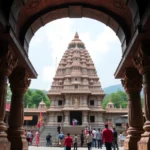


The Five Elements Come Alive: A Pilgrimage to the Pancha Bhoota Shiva Temples Of Tamil Nadu & Andhra Pradesh
The five Pancha Bhoota Shiva temples situated across Tamil Nadu and Andhra Pradesh. stand as a remarkable pilgrimage circuit that embodies the five elemental forces of earth, water, fire, air, and ether in Hindu tradition.
“The divine is the very breath of the universe; the five elements are its voice.”
If you’ve ever felt the hum of a temple bell reverberate through stone, the cool mist of a sacred tank splash against your skin, or the flicker of a thousand oil‑lamps dancing in the night, you already know why the Pancha Bhoota Shiva (the “five‑element” abodes of Lord Shiva) have captivated devotees for millennia.
[Air]   Kalahasti (Andhra Pradesh) ──► [Earth]   Kanchipuram (Tamilnadu)
   ▲                                          ▼
[Fire]  Thiruvannamalai (Tamilnadu) ◄──► [Water]  Thiruvanaikaval (Tamilnadu)
   ▲                                          ▼
[Either / Space]   Chidambaram (Tamilnadu)  ◄─────────────────────►
Tip: The most efficient loop for a 3‑day / 4 Day / 5 Days itinerary is Chennai → Kalahasti → Thiruvannamalai→ Thiruvanaikaval → Chidambaram → back to Chennai.
Why Earth?
The temple’s sanctum houses a Shivalingam made of sand—the literal embodiment of Prithvi (earth). Legend says the goddess Parvati manifested the lingam from sand to prove her devotion to Shiva.
Highlights
| Feature | What to See / Do |
|---|---|
| Gajapravesam (Elephant Entry) | Every 12 years the deity is taken on a ceremonial elephant procession—plan your visit for the next cycle in 2028! |
| Maha Prasad | Try the “Kanchipuram Sweet” (aka Mysore Pak), a temple‑offered delight made from ghee, sugar and cardamom. |
| Architecture | The towering gopuram (gateway tower) is a perfect study in Dravidian stone carving—count the 108 carved motifs for a meditative exercise. |
Practical Info
- Opening Hours: 5:30 am – 1:00 pm, 4:30 pm – 8:30 pm (closed on Fridays)
- Dress Code: Modest attire; no shorts or sleeveless tops.
- How to Get There: 70 km south of Chennai, regular buses and a 1‑hour drive via NH‑48.
Why Water?
A continuous spring flows beneath the sanctum, keeping the Shivalingam perpetually wet—an immutable symbol of the element Jala.
Highlights
| Feature | What to See / Do |
|---|---|
| The Sacred Well (Theertham) | Dip your feet in the cool water; it’s believed to purify the soul. |
| Mural Paintings | 13th‑century frescoes depict the myth of Shiva’s battle with the demon Jalandhara—a story about water’s cleansing power. |
| Night Aarti | Attend the Ratri Aarti (7 pm) when the entire inner sanctum lights up with oil lamps, reflecting off the water’s surface. |
Practical Info
- Opening Hours: 5:30 am – 12:30 pm, 4:30 pm – 8:30 pm (closed on Tuesdays)
- Best Time: Early morning—mist rises off the tank, creating a surreal atmosphere.
- How to Get There: 10 km north of Trichy; frequent local buses from Tiruchirappalli Junction.
Why Fire?
The Annamalai Hill itself is considered the lingam of fire (Agni). Legend tells of Shiva appearing as a column of flame that “pierced the heavens”.
Highlights
| Feature | What to See / Do |
|---|---|
| Girivalam (Circumambulation) | Walk the 14 km path around the hill at sunrise or full moon—each step is a prayer to the fire within. |
| Karthigai Deepam Festival | Held in November/December; a massive beacon is lit atop the hill, visible for miles—a true celebration of divine fire. |
| Ash‑Strewn Sanctum | The inner sanctum floor is covered in ash, reminding devotees of impermanence and the purifying nature of fire. |
Practical Info
- Opening Hours: 5:30 am – 12:30 pm, 4:30 pm – 8:30 pm (closed on Mondays)
- Accommodation: Numerous agras (pilgrim hostels) and mid‑range hotels; book early if visiting during Karthigai Deepam.
- How to Get There: 170 km north of Chennai via NH‑45; regular trains from Chennai Egmore and Tiruchirappalli.
Why Ether?
The sanctum houses the Chidambaram Rahasya (the secret of space)—a golden Chidambara Rahasyam (mystery) concealed behind a curtain, representing Akasha (the all‑pervading ether).
Highlights
| Feature | What to See / Do |
|---|---|
| The Empty Sanctum | No idol is seen; instead a silver‑plated parikrama (inner wall) is drawn to symbolize the formlessness of space. |
| Nataraja’s Cosmic Dance | Witness the Rudra Tandava (dance of destruction) performed by a troupe of trained Bharatanatyam dancers during the Arudra Darisanam festival (December). |
| The Sacred Well (Saniyadri) | Drink the water believed to grant clarity of mind—an echo of the limitless nature of ether. |
Practical Info
- Opening Hours: 5:30 am – 1:30 pm, 4:30 pm – 8:30 pm (closed on Wednesdays)
- Best Visit: 6 am–7 am for the Kalabhairava procession when the temple is bathed in soft sunrise light.
- How to Get There: 285 km south of Chennai; easy bus links from Cuddalore or a scenic 4‑hour drive.
The Vayu Linga (air‑lingam) at Srikalahasti symbolizes Vāyu, the life‑force wind. The temple’s location atop a hill and the constant breeze that sweeps through its corridors make the element tangible.
Highlights
| Feature | What to See / Do |
|---|---|
| Vayu Pradakshina (Wind Circumambulation) | Walk clockwise around the Vayu Linga while feeling the breeze—believed to grant relief from respiratory ailments. |
| Nagaraja Festival | Held in June/July; snakes released inside the temple pond symbolize the “air‑snake”—a unique ritual not seen elsewhere. |
| Siddhendra Yogi’s Shrine | Pay homage to the 14‑th‑century saint who composed Kalahasti Kirthanas (devotional songs) that invoke the wind’s melody. |
Practical Info
- Opening Hours: 5:30 am – 12:30 pm, 4:30 pm – 8:30 pm (closed on Saturdays)
- Travel Note: The nearest airport is Tirupati (≈ 45 km). Frequent APSRTC buses from Tirupati and Chennai.
- Stay Recommendation: Sree Kalahasti Bhaktha Bhavan (pilgrim guesthouse) offers simple, clean rooms at a modest price.
- Ecological Symbolism – In an era of climate anxiety, the Pancha Bhoota temples remind us that humanity is inseparably linked to earth, water, fire, air, and ether.
- Cultural Continuity – The rituals, music, and dance performed at these shrines have survived dynastic changes from the Pallavas to the British Raj, offering a living museum of South Indian art.
- Personal Transformation – Pilgrims report a deep sense of grounding (Earth), emotional cleansing (Water), renewed vigor (Fire), mental clarity (Air), and spiritual expansiveness (Ether).
Walking the steps of the Pancha Bhoota Shiva temples is more than a journey across stone and sandalwood; it is a pilgrimage through the very elements that compose our universe. As the wind whispers through Srikalahasti’s hill, the water laps at Thiruvanaikaval’s tank, the fire blazes atop Arunachala, the earth steadies you in Kanchipuram, and the ether expands in Chidambaram’s silent sanctum—you will find that the divine is not a distant myth but a tangible pulse resonating within you.
So pack your bags, slip on your sandals, and let the five elements guide you home. 🙏