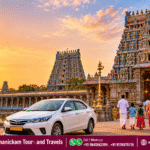


How Many Days to Cover Arupadai veedu Temple Tour Package

How Many Days to Cover Arupadai veedu Temple Tour Package

How Many Days to Cover Arupadai veedu Temple Tour Package The Arupadai Veedu, or the Six Battle Camps of Lord Murugan, are among the most revered pilgrimage circuits in Tamil Nadu. Devotees of Lord Karthikeya (Subramanya, Kumaran) travel from across India and abroad to visit all six temples, which are celebrated in Tamil devotional literature such as Thirumurugatrupadai. The first question every pilgrim asks is: “How many days do I need to cover the Arupadai Veedu temple tour?” The short answer is 3 to 5 days, depending on your pace, mode of travel and starting city. This guide breaks it all down. What Are the Six Arupadai Veedu Temples? # Temple District 1 Thiruparankundram Subramaniya Swamy Temple Madurai 2 Thiruchendur Subramaniya Swamy Temple Thoothukudi 3 Palani Dhandayuthapani Swamy Temple Dindigul 4 Swamimalai Swaminatha Swamy Temple Thanjavur (near Kumbakonam) 5 Thiruthani Subramaniya Swamy Temple Tiruvallur 6 Pazhamudircholai Solaimalai Murugan Temple Madurai (near Alagar Koil) Note that these temples are spread across the length of Tamil Nadu, from Thiruthani in the north to Thiruchendur on the southern coast. That distance is the main reason the tour takes several days So, How Many Days Does an Arupadai Veedu Tour Take? Here is a quick comparison of the common tour durations: 3 Days / 2 Nights: A fast-paced express tour. Possible with an early start each day and long driving hours. Suitable for experienced travelers and groups on a tight schedule. 4 Days / 3 Nights: The most popular and balanced option. It allows comfortable darshan at each temple with reasonable rest. 5 Days / 4 Nights: The most relaxed option, ideal for families with senior citizens or children. It leaves time for slow darshan, rituals and sightseeing. 6 Days or more: Best for devotees who want to perform special poojas, abhishekam or the Palani hill climb on foot. Our recommendation: Choose a 4-day tour package for the best balance of comfort and cost. Day-Wise Plan for 3 Days / 2 Nights Arupadai Veedu Express Tour (Chennai to Chennai) Day 01: Chennai → Thiruthani → Swamimalai → Palani Night Stay: Palani 5:00 AM: Pickup from Chennai 8:00 AM to 9:30 AM: Darshan at Thiruthani Murugan Temple (Fifth Abode) 10:00 AM: Depart for Swamimalai 5:00 PM to 6:30 PM: Darshan at Swamimalai Murugan Temple (Fourth Abode) 7:00 PM: Depart for Palani 12:00 AM: Arrive at Palani, check in to the hotel and rest Day 02: Palani → Pazhamudhircholai → Thiruparankundram → Tiruchendur Night Stay: Tiruchendur 5:30 AM to 9:00 AM: Darshan at Palani Murugan Temple (Third Abode) 10:00 AM: Depart for Pazhamudhircholai 4:00 PM to 5:00 PM: Darshan at Pazhamudhircholai Murugan Temple (Sixth Abode) 6:30 PM to 8:00 PM: Darshan at Thiruparankundram Murugan Temple (First Abode) 12:00 AM: Arrive at Tiruchendur, check in to the hotel and rest Day 03: Tiruchendur → Chennai Tour Ends: Chennai Drop 5:00 AM to 12:00 PM: Darshan at Tiruchendur Murugan Temple (Second Abode) 12:30 PM: Depart for Chennai Approx. 11:00 PM: Drop at Chennai 3 Days Tour Price View Day-Wise Itinerary: 4 Days / 3 Nights Arupadai Veedu Tour (Chennai to Chennai) Day 01: Chennai → Thiruthani → Kumbakonam Night Stay: Kumbakonam Your pilgrimage begins with an early 5:30 AM pickup from Chennai. Drive to Thiruthani and have darshan at the Fifth Abode (Aaraam Padai Veedu) of the Arupadai Veedu of Lord Murugan. After darshan, continue to Kumbakonam. On arrival, check in to your hotel and relax for the evening. Day 02: Kumbakonam → Swamimalai → Tiruchendur Night Stay: Tiruchendur Check out at 6:00 AM and drive to Swamimalai. Have darshan at the Fourth Abode of the Arupadai Veedu of Lord Murugan. After darshan, proceed to Tiruchendur. On arrival, check in to your hotel and relax for the evening. Day 03: Tiruchendur → Thiruparankundram → Pazhamudhircholai → Palani Night Stay: Palani In the morning, have darshan at the Tiruchendur Murugan Temple, the Second Abode of the Arupadai Veedu. After darshan, check out and proceed to Thiruparankundram for darshan at the First Abode. Then drive about one hour to Pazhamudhircholai for darshan at the Sixth Abode. After darshan, continue to Palani and transfer to your hotel for an overnight stay. Day 04: Palani → Chennai Tour Ends: Chennai Drop Check out in the morning and have darshan at the Palani Murugan Temple, the Third Abode of the Arupadai Veedu. After darshan, begin the return journey to Chennai (approximately 9 hours of travel). Your tour ends on arrival. Day 04: Palani → Chennai Tour Ends: Chennai Drop Check out in the morning and have darshan at the Palani Murugan Temple, the Third Abode of the Arupadai Veedu. After darshan, begin the return journey to Chennai (approximately 9 hours of travel). Your tour ends on arrival. 4 Days Tour Price View Factors That Decide How Many Days You Need Starting city: Starting from Chennai, Trichy or Madurai changes the route and total travel time. Mode of transport: Private car, tempo traveller, coach or train and taxi combinations all affect timing. Group profile: Seniors, children and people with mobility issues need more rest stops. Darshan type: Special darshan and abhishekam bookings take more time than regular queues. Season and festivals: Temples get extremely crowded during Thaipusam, Skanda Sashti, Panguni Uthiram and Karthigai festivals. Travel order: A well-planned route saves a full day of backtracking. Approximate Distances Between the Temples Thiruthani to Swamimalai: about 300 km Swamimalai to Palani: about 190 km Palani to Thiruparankundram (Madurai): about 120 km Madurai to Pazhamudircholai: about 25 km Madurai to Thiruchendur: about 160 km Distances are approximate. Check actual road conditions before travel. Best Time to Visit the Arupadai Veedu Temples The ideal season is October to March, when the weather is cooler and pleasant. Summer (April to June) can be very hot, especially for the hill temples at Palani and Thiruthani. Festival periods are spiritually rewarding but very crowded, so book early and add an extra day. What Is Included in a Typical Arupadai Veedu Tour Package? Air-conditioned vehicle with an experienced driver Hotel or

How to Plan Mahabalipuram One Day Tour Package from Chennai

How to Plan Mahabalipuram One Day Tour Package from Chennai

How to Plan Mahabalipuram One Day Tour Package from Chennai Planning a Mahabalipuram One Day Tour Package from Chennai is a great way to explore ancient temples, UNESCO World Heritage monuments, beautiful beaches, and exciting family attractions in a single day. Located along the scenic East Coast Road (ECR), Mahabalipuram is famous for its historic Shore Temple, Pancha Rathas, Arjuna’s Penance, and magnificent stone carvings. Rajamanickam Tours and Travels offers convenient Chennai to Mahabalipuram one-day tour packages with AC car rental and Tempo Traveller options. Whether you are travelling with family, friends, or a small group, you can choose a suitable vehicle and enjoy a planned sightseeing itinerary with Chennai pickup and drop-off. Chennai to Mahabalipuram One Day Tour Itinerary Follow this suggested itinerary to explore popular attractions along East Coast Road and the historic monuments of Mahabalipuram. Time Sightseeing Plan 8:30 AM Pickup from Chennai 9:45 AM Visit DakshinaChitra Heritage Museum 10:45 AM Muttukadu Boat House 12:00 PM Kovalam Beach 12:15 PM Madras Crocodile Bank 1:00 PM – 2:00 PM Lunch break 2:15 PM India Seashell Museum 2:45 PM Pancha Rathas 3:10 PM Mahishamardini Cave 3:30 PM Mahabalipuram Lighthouse 4:00 PM Arjuna’s Penance 4:15 PM Krishna’s Butter Ball 4:30 PM Shore Temple 5:45 PM Mahabalipuram Seashore Beach 6:45 PM Proceed to Chennai 9:00 PM Drop-off in Chennai Note: This is a suggested schedule. Actual timings depend on traffic, queue lengths, attraction opening hours, and the time spent at each location. Some stops may need to be shortened or skipped to keep the tour on schedule. Confirm opening hours and entry arrangements before departure. Best Places to Visit on Your Mahabalipuram One Day Trip 1. DakshinaChitra Heritage Museum Begin your sightseeing with DakshinaChitra, a cultural heritage museum showcasing the traditional architecture, crafts, and lifestyles of South India. It is an interesting stop for families and visitors who want to learn about Tamil Nadu’s cultural heritage. 2. Muttukadu Boat House Muttukadu Boat House is a popular stop along ECR, known for its scenic backwaters and boating activities. Visitors can enjoy the waterfront views and check the availability of boating services before arrival. 3. Kovalam Beach Kovalam Beach offers a refreshing coastal setting for a short stop and photographs. Enjoy the sea breeze while keeping your visit brief so you have enough time for the remaining attractions. 4. Madras Crocodile Bank Muttukadu Boat House is a popular stop along ECR, known for its scenic backwaters and boating activities. Visitors can enjoy the waterfront views and check the availability of boating services before arrival. 5. India Seashell Museum Explore the India Seashell Museum, which displays a wide variety of shells and marine-themed collections. It is a useful addition to your itinerary if you enjoy unusual exhibits and family-friendly attractions. 6. Pancha Rathas Pancha Rathas is one of Mahabalipuram’s most famous heritage sites. These five remarkable monolithic monuments showcase the stone-carving skills and architectural traditions of the Pallava dynasty. 7. Mahishamardini Cave Visit Mahishamardini Cave to admire its rock-cut architecture and detailed religious sculptures. The cave is an excellent stop for travellers interested in ancient temple art and South Indian history. 8. Mahabalipuram Lighthouse The historic lighthouse is a prominent landmark overlooking the coastal landscape. If you plan to climb the lighthouse, check visitor timings and access restrictions in advance. 9. Arjuna’s Penance Arjuna’s Penance is a spectacular open-air bas-relief featuring intricately carved figures, animals, and mythological scenes. It is one of the most important attractions for understanding Mahabalipuram’s artistic heritage. 10. Krishna’s Butter Ball Krishna’s Butter Ball is a huge boulder resting on a sloping rock surface. It is a favourite photography spot for visitors and an enjoyable stop during your heritage tour. 11. Shore Temple The Shore Temple is an iconic coastal monument dedicated to Lord Shiva and associated with the historic Pallava period. Its seaside location and ancient stone architecture make it one of the highlights of a Mahabalipuram sightseeing trip. 12. Mahabalipuram Seashore Beach End your sightseeing with a relaxing visit to Mahabalipuram’s beach area. Enjoy the coastal atmosphere, take photographs, and prepare for the return journey to Chennai. Chennai to Mahabalipuram One Day Tour Car Package Price Choose a vehicle according to your group size, comfort preferences, and travel budget. The following are the provided package prices for a Chennai to Mahabalipuram one-day trip. Vehicle Type Seating Capacity Package Price Swift Dzire AC Car 4+1 ₹4,000 Etios AC Car 4+1 ₹4,000 Ertiga AC Car 7+1 ₹5,750 Innova AC Car 7+1 ₹6,000 Crysta AC Car 7+1 ₹3,700 AC Tempo Traveller 12+1 ₹7,500 Important: Please confirm the Crysta package price of ₹3,700, as it is lower than the listed prices for the other car options. Confirm the package inclusions, permitted hours and kilometres, parking charges, entry tickets, and any additional fees before booking. Which Vehicle Is Best for Your Mahabalipuram Trip? AC Sedan – Swift Dzire or Etios An AC sedan is a practical choice for couples and small families looking for an affordable private sightseeing trip from Chennai. AC Ertiga or Innova These vehicles are suitable for families and small groups who prefer additional passenger space and a comfortable journey along ECR. AC Toyota Innova Crysta The Crysta is a premium MPV option for travellers who prioritise comfort during a full-day sightseeing trip. Confirm the applicable package tariff when booking. AC Tempo Traveller A 12+1 AC Tempo Traveller is a convenient option for larger families, friends, and group outings. Everyone can travel together, making it easier to coordinate sightseeing stops. How to Plan Your Mahabalipuram Tour Successfully Book your vehicle in advance: Weekends and public holidays can be busy, so reserve your preferred vehicle early. Start on time: An 8:30 AM pickup helps you make the most of the day. Check attraction timings: Museums, boating facilities, and heritage sites may have different operating schedules. Plan lunch in advance: Allow enough time for a comfortable meal without delaying afternoon sightseeing. Carry essentials: Bring drinking water, sunscreen, hats, and comfortable walking shoes. Keep the itinerary flexible: If an attraction is crowded

Pancha Bhoota Temples List Distance Route Map

Pancha Bhoota Temples List, Distance & Route Map

Pancha Bhoota Temples List: Complete Guide to the 5 Element Shiva Temples (Location, Distance, Map & Travel Tips) The Pancha Bhoota Temples (also called Pancha Bhoota Sthalams) are five sacred Shiva temples in South India. Each is dedicated to one of the five great elements, or pancha bhoota: earth, water, fire, air, and space. Four are in Tamil Nadu and one is in Andhra Pradesh. Whether you are planning a pilgrimage, a heritage trip, or a long road journey from Chennai, this guide covers the complete list, locations, distances, legends, timings, and travel tips. Pancha Bhoota Temples at a Glance Element Sanskrit / Tamil Name Temple Location State Earth Prithvi / Nilam Ekambareswarar Temple Kanchipuram Tamil Nadu Water Jala (Appu) / Neer Jambukeswarar Temple Thiruvanaikaval, Trichy Tamil Nadu Fire Agni / Thee Annamalaiyar Temple Tiruvannamalai Tamil Nadu Air Vayu / Kaatru Srikalahasti Temple Srikalahasti Andhra Pradesh Space Akasha / Aagayam Thillai Nataraja Temple Chidambaram Tamil Nadu Traditional order: Kanchipuram (earth) → Thiruvanaikaval (water) → Tiruvannamalai (fire) → Srikalahasti (air) → Chidambaram (space). What Is the Meaning of Pancha Bhoota? In Indian philosophy, the physical world and the human body are made of five elements: earth (prithvi), water (jala), fire (agni), air (vayu), and space (akasha). The Pancha Bhoota Sthalams are the places where Shiva is worshipped as the formless power behind each element. The shrines are celebrated in the Tamil devotional hymns of the Nayanmar saints, and the pilgrimage is believed to bring devotees closer to balance within themselves and with nature. 1. Ekambareswarar Temple, Kanchipuram (Earth) Location: Kanchipuram, about 75 km from ChennaiDeity: Ekambareswarar (Prithvi Lingam) with Goddess ElavarkuzhaliElement: Earth Kanchipuram is known as the “city of a thousand temples.” According to legend, Goddess Parvati made a lingam out of sand beneath a mango tree and worshipped Shiva. When a flood threatened it, she embraced the lingam to protect it. The sand lingam is therefore anointed gently, with ritual rather than water abhishekam. Highlights: A towering southern gopuram, among the tallest in Tamil Nadu A hall of 1,000 pillars An ancient mango tree in the complex, said to be thousands of years old Pallava, Chola, and Vijayanagara period architecture Nearby: Kamakshi Amman Temple, Kailasanathar Temple, Varadharaja Perumal Temple, Kanchipuram silk sarees 2. Jambukeswarar Temple, Thiruvanaikaval (Water) Location: Thiruvanaikaval, Tiruchirappalli (Trichy), about 330 km from ChennaiDeity: Jambukeswarar (Appu Lingam) with Goddess AkilandeswariElement: Water The sanctum has a natural underground spring that keeps the area around the lingam wet throughout the year. The name comes from a jambu (rose-apple) tree and a famous legend of a white elephant and a spider that both worshipped Shiva here. In a well-known midday ritual, the priest dresses as a woman to offer worship to Shiva, symbolizing the Goddess’s devotion. Highlights: Spring water around the lingam Five enclosures (prakarams) and multiple gopurams Elegant Chola-era sculpture Close to the Srirangam Ranganathaswamy Temple Nearby: Srirangam, Rockfort Ucchi Pillayar Temple, Samayapuram Mariamman Temple 3. Annamalaiyar Temple, Tiruvannamalai (Fire) Location: Tiruvannamalai, about 190 km from ChennaiDeity: Annamalaiyar (Agni Lingam) with Goddess Unnamulai AmmanElement: Fire Built at the base of the sacred Arunachala hill, this is one of the largest temple complexes in India. The legend says Shiva appeared as an endless column of fire when Brahma and Vishnu argued over who was supreme. Every year during Karthigai Deepam (November–December), a huge fire beacon is lit on the hilltop, attracting devotees in very large numbers. Highlights: Four towering gopurams, with the eastern one among the tallest in India Girivalam, a roughly 14 km walk around the hill, especially on full-moon nights Ashrams linked to Sri Ramana Maharshi and Seshadri Swamigal Nearby: Sri Ramanasramam, Virupaksha Cave, Skandashram, Jawadhu Hills 4. Srikalahasti Temple, Andhra Pradesh (Air) Location: Srikalahasti, Tirupati district, about 115 km from Chennai and about 36 km from TirupatiDeity: Kalahastheeswara (Vayu Lingam) with Goddess Gnana PrasunambikaElement: Air On the banks of the Swarnamukhi river, Srikalahasti is named after a spider (Sri), a snake (Kala), and an elephant (Hasti), all devotees of Shiva. Devotees believe the lamps near the sanctum flicker even without any draft, which is taken to symbolize the Vayu lingam. The temple is also linked to the hunter-saint Kannappa Nayanar, famed for his devotion. Highlights: A temple partly built into a rock hillside Popular for Rahu-Ketu dosha pujas Combines easily with a Tirupati trip Nearby: Tirumala Venkateswara Temple, Tiruchanur, Kanipakam Vinayaka Temple 5. Thillai Nataraja Temple, Chidambaram (Space) Location: Chidambaram, Cuddalore district, about 245 km from ChennaiDeity: Nataraja (Akasha) with Goddess SivakamiElement: Space (ether) Chidambaram is unique among the five. The Chidambara Rahasyam, the “secret of Chidambaram,” is an empty space behind a curtain, representing the formless, all-pervading divine. This is also the best-known temple for Shiva as Nataraja, the cosmic dancer, shown in the Ananda Tandava pose. Highlights: Golden-roofed Chit Sabha sanctum Carvings of dance postures (karanas) from the Natya Shastra on the gopurams Tradition of hereditary priests (Dikshitars) A shrine of Govindaraja Perumal (Vishnu) within the same complex Nearby: Pichavaram Mangrove Forest, Gangaikonda Cholapuram, Annamalai University area, Vaitheeswaran Koil Distance from Chennai to Each Pancha Bhoota Temple Temple Approx. Distance Approx. Drive Time Kanchipuram 75 km 2 hrs Srikalahasti 115 km 2.5–3 hrs Tiruvannamalai 190 km 4–4.5 hrs Chidambaram 245 km 5–5.5 hrs Thiruvanaikaval (Trichy) 330 km 6–6.5 hrs Distance Between Pancha Bhoota Temples (Suggested Route) From To Distance Drive Time Srikalahasti Kanchipuram ~125 km 2.5–3 hrs Kanchipuram Tiruvannamalai ~100 km 2–2.5 hrs Tiruvannamalai Chidambaram ~150 km 3–3.5 hrs Chidambaram Thiruvanaikaval ~175 km 3.5–4 hrs Total   ~550 km 12–14 hrs Distances are approximate. Check live routes on Google Maps before travelling. Pancha Bhoota Temples Route Map Chennai → Srikalahasti → Kanchipuram → Tiruvannamalai → Chidambaram → Thiruvanaikaval → Chennai 📍 Chennai⬇️🌬️ Srikalahasti – Air / Vayu⬇️🌍 Kanchipuram – Earth / Prithvi⬇️🔥 Tiruvannamalai – Fire / Agni⬇️✨ Chidambaram – Space / Akasha⬇️💧 Thiruvanaikaval – Water / Appu⬇️🏁 Chennai – Return Journey Sample 3-Day Pancha Bhoota Itinerary from Chennai Day 1: Chennai → Srikalahasti → Kanchipuram Early start for Srikalahasti darshan Lunch, then drive to Kanchipuram

Login